Påkjørsel Av Dyr: what to do step by step in Norway
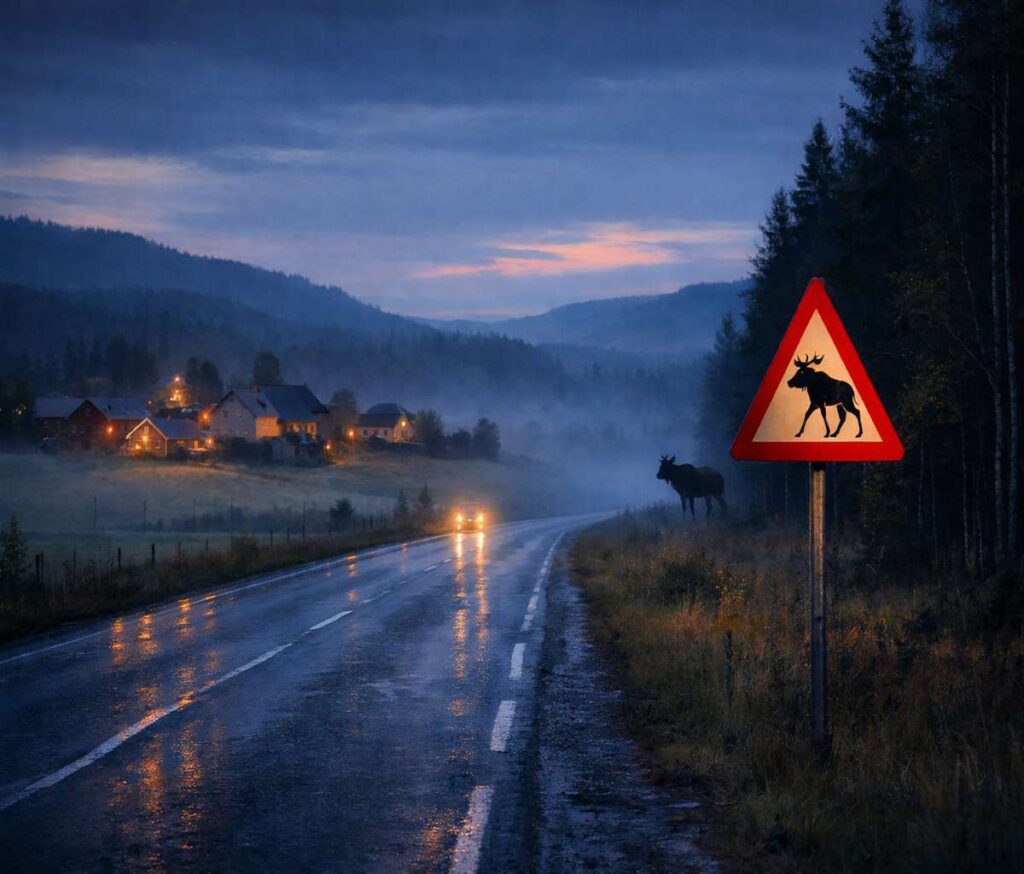
If you drive in Norway long enough, the possibility of påkjørsel av dyr starts to feel less like a remote “what if” and more like a practical scenario you should be ready for. It’s not just about the shock of the moment. It’s about what you do next — in the dark, in the rain, with traffic still moving — and how your choices affect safety, insurance, and animal welfare.
This guide is intentionally hands-on. If you want the bigger picture of how the local system works (and why the municipal wildlife committee matters), you can jump over to the main article on viltnemnda and come back here when you want the checklist.
First things first: stop safely and protect people
Right after a collision — or even a near miss where you’re not fully sure what happened — the priority is the same: keep people safe. Turn on your hazard warning lights, pull over as safely as possible, and take a breath before you do anything else. It sounds obvious, but in real life your brain can race ahead while your body is still shaking.
- Turn on your hazard warning lights.
- Move to a safe spot if the vehicle is still drivable and it’s safe to do so.
- Check yourself and passengers for injuries before focusing on the animal or the car.
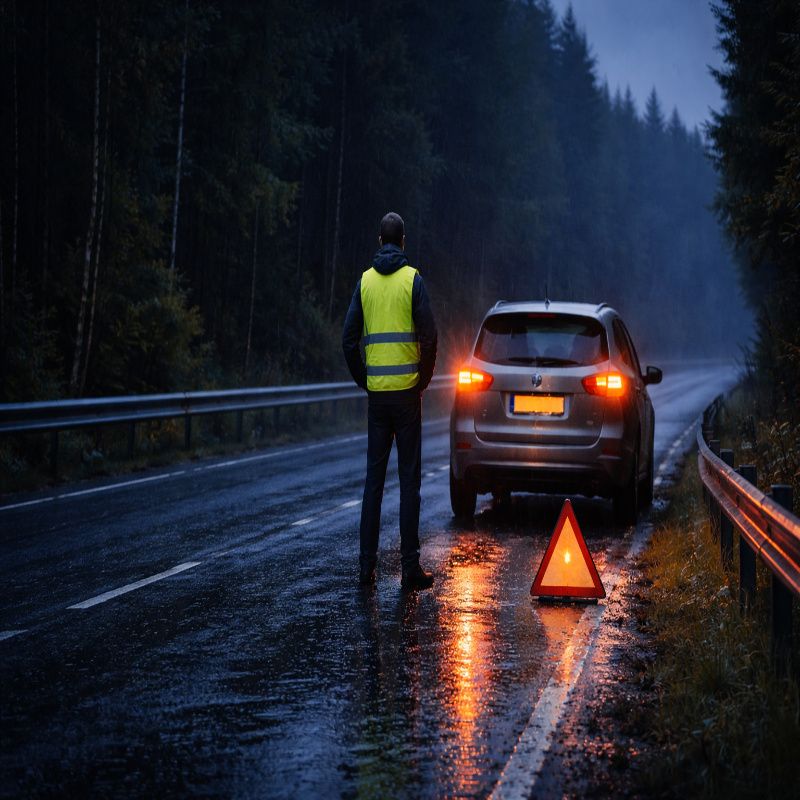
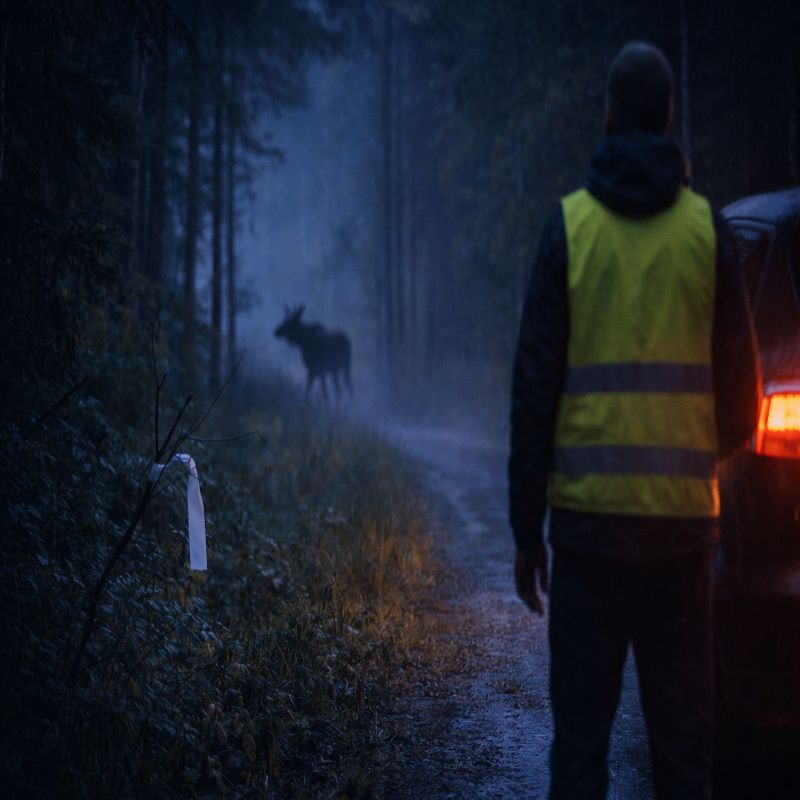
The Norwegian Public Roads Administration specifically recommends securing the scene by using a warning triangle, hazard lights, and a reflective vest. They also suggest marking the location so it can be found later by local personnel. (More on that in a moment.)
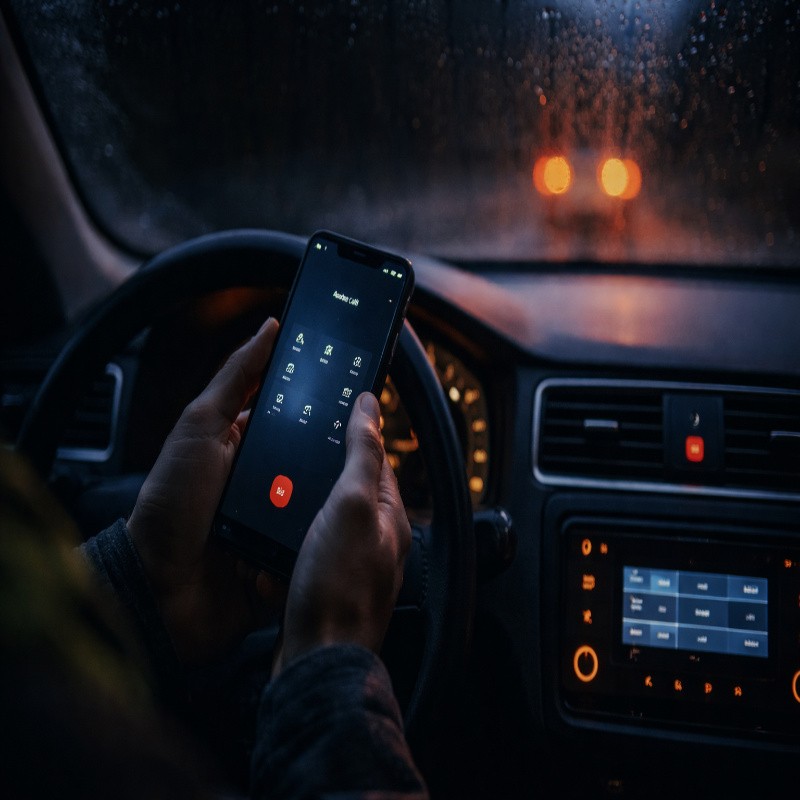
Report it: you must call the police
Here’s the part many people don’t love hearing: a vehicle–animal collision isn’t punishable, but failing to report it is an offence. The official guidance is to call the police on 02800. When you report the collision, the police notify the wildlife committee and other relevant stakeholders.
If you’re thinking, “But the animal ran away, and my bumper is barely scratched,” yes — you still report it. In fact, those are the situations where injured animals can suffer out of sight, and where a trained tracking team may need to search.
- Call the police on 02800 to report the collision.
- Share the location as precisely as you can.
A small practical detail that can really help: the official guidance notes that providing coordinates from your phone map is useful, and that if you use the “Hjelp 113” app to call, your location can be seen. That’s one of those details people only appreciate after they’ve stood on a dark roadside trying to explain “roughly near the bend.”
Secure and mark the accident site
After you’ve checked for injuries and made the call, focus on preventing a second accident. Wet asphalt, low visibility, and distracted drivers are a bad mix.
- Set up a warning triangle.
- Keep hazard warning lights on.
- Put on a reflective vest if you have one.
If you’re allowed to drive on, you should also mark where the collision happened so it’s easier for local personnel to find the right spot. The Norwegian Public Roads Administration suggests using something visible you have in the car — for example, a plastic bag or another easily seen object.
If you’d like to understand who those “local personnel” typically are — and how municipalities organize this in practice — the background section in the viltnemnda guide explains the chain between police, municipal responsibility, and tracking teams.
Should you put the animal down?
This is where people can feel torn. You may want to “fix” the situation quickly, or you may feel responsible and think you should do something immediately. But official guidance is clear: you should not euthanise the animal yourself unless the police approve it. The idea is to prevent unnecessary suffering and ensure competent personnel assess what should happen.
There are exceptions, but they’re narrower than people assume. According to the official guidance, small wild animals and birds may be euthanised by you if it is obvious they will not survive. For big game, livestock, or domestic animals, the guidance notes euthanasia can be considered if it is obvious the animal will not survive and you cannot reach the owner, a veterinarian, or the police within a reasonable time.
If you’re unsure, treat that uncertainty as your answer. Wait for instructions. It’s better to feel a little helpless than to make things worse.
Do not pursue an injured animal
This point deserves its own line because people still do it. The official guidance says: do not pursue an injured animal. It may be dangerous, and it makes the job difficult for search dogs.
And yes, it can feel counterintuitive — you might think following tracks is helpful. In practice, trained teams (often with dogs) are set up for this, and the safest action is to mark the location and let the system work.
Why reporting matters for insurance
Even if your main concern is the vehicle, documentation matters. A municipality example (Skien) notes that documentation showing the collision was reported to the responsible authority can be important for an insurance settlement, and that such documentation may be obtained via the municipality’s tracking hunter or via the police.
Insurance processes vary, and it’s not always straightforward. Still, the pattern is predictable: if you report quickly, record the location clearly, and follow instructions, you’re usually in a much stronger position later.
What happens after you call: who actually responds?
A lot happens behind the scenes once you report a collision. The Norwegian Public Roads Administration states that when you report to the police, they notify the wildlife committee and other relevant stakeholders. In many municipalities, the practical work is handled by a dedicated tracking team that searches for and, if needed, euthanises injured wildlife.
Skien municipality provides a very concrete example of how this can be organized: it notes that the political wildlife committee has been discontinued there, but the practical duties are handled by an ettersøkskorps (tracking team). It also indicates the municipality is responsible for dealing with sick and injured wildlife, commonly in connection with collisions.
That’s one reason a “one-size-fits-all” explanation can be misleading. The responsibilities are real, but the structure can differ locally. If you want to go deeper on local roles and why the term viltnemnda is still widely used even where the committee format has changed, the main viltnemnda article is the best place to anchor that understanding.
How to reduce the risk of hitting wildlife
No guide can remove the risk entirely. Animals move the way they move, and roads cut through habitats. Still, the official guidance offers practical prevention steps, and honestly, they’re not complicated — they just require consistency.
- Adjust your speed to the conditions so you can stop quickly.
- Regularly sweep your eyes across terrain on both sides of the road.
- Be extra cautious where signs warn of wildlife or farm animals.
The guidance also highlights a detail drivers sometimes forget: deer, sheep and goats are herd animals. If you see one, slow down carefully because there may be more. It also notes that even calm animals can be startled and run in front of your car.
Pay attention at dusk, dawn, and during snowy periods
Timing matters. The official guidance states that most wildlife collisions occur at dusk or dawn, as animals often move between day and night areas. It also notes that most vehicle–elk collisions occur from autumn to spring, and that in winters with large amounts of snow, the risk of collisions with deer and elk increases drastically.
If you’ve driven rural roads after fresh snowfall, you probably already feel this in your bones. Visibility drops, stopping distance changes, and animals may use roads as easier corridors. It’s not a great combination.
Common questions people ask after a collision
What if I only clipped the animal and it ran away?
You still report it. Official guidance emphasizes that it is an offence not to report a vehicle–animal collision, even though the collision itself is not punishable. Reporting also triggers notification to the wildlife committee and other stakeholders so injured animals can be assessed and found.
What if the animal is blocking the road?
Prioritize safety and follow instructions from the police. If you can do so without putting yourself at risk, warn other drivers and keep the scene visible with lights and triangle. Avoid close contact with large injured animals; they can move suddenly and unpredictably.
What if I’m not sure whether it was an animal at all?
If there’s a real possibility you hit wildlife — you saw movement, heard impact, or found hair/damage — it’s still reasonable to report. It’s better to be a little embarrassed than to leave an injured animal without a chance of being found.
A calm, realistic checklist you can remember
In the moment, you won’t think in perfect bullet points. So here’s a simple mental order that matches the official priorities: protect people, report, mark, then step back. That’s it.
- Stop safely and switch on hazard warning lights.
- Check for injuries and secure the site with a warning triangle and reflective vest.
- Call the police on 02800 and share precise location details.
- Mark the collision site so local personnel can find it.
- Do not pursue an injured animal.
- Do not euthanise the animal yourself unless approved by the police (with limited exceptions).
If you want one broader takeaway: påkjørsel av dyr is not just a driving mishap. It’s a safety event, an animal welfare event, and often an administrative event too. The faster you plug into the proper reporting chain, the better the outcome tends to be — even if it feels slow while you’re waiting by the roadside.