
Elephantine island: history, temples, and how to plan your visit
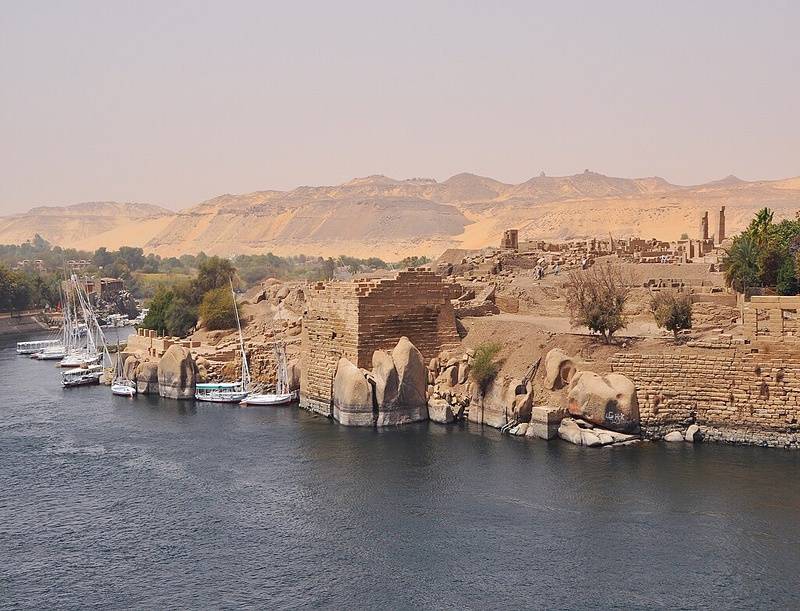
If you stand on the Corniche in Aswan and look out across the Nile, it is hard to miss Elephantine Island sitting low and green in the water, dotted with palm trees, ruins, and clusters of painted Nubian houses. At first glance it can look almost modest, especially compared with more famous sites like Philae Temple or Abu Simbel, but this little island has more than 5,000 years of continuous human history layered into it. And if you give it a full morning or even a night, rather than just a rushed stop, it tends to linger in your memory in a quiet, surprisingly powerful way.
Where Elephantine Island is and how to get there
Elephantine Island lies in the Nile directly opposite the city of Aswan in southern Egypt, forming part of the first cataract region that marked the traditional southern boundary of ancient Egypt. The island is roughly 1.2 kilometers long, narrow and elongated, with Nubian villages at its center and south and archaeological sites and the Aswan Museum toward the southern end.
Reaching Elephantine Island is straightforward, and honestly, the short boat ride is part of the charm. The most common option is the local public ferry from the Aswan Corniche, which shuttles back and forth throughout the day and usually takes only a few minutes to cross. You can also hire a private motorboat or a traditional felucca, which costs more but gives a more relaxed approach and lets you enjoy views up and down the Nile as you arrive.
If you are planning a broader Aswan itinerary, it often makes sense to pair a visit to Elephantine Island with other key Aswan attractions such as Philae Temple, the Unfinished Obelisk, the High Dam, or the Nubian Museum on different days rather than trying to cram everything into one long, exhausting outing. That way the island becomes a slower, more contemplative stop rather than yet another rushed tick on a checklist.
A brief history of Elephantine Island
The ancient Egyptians knew Elephantine Island as Abu or Yebu, names linked to the word for “elephant” or “ivory,” a reminder that this was once a major hub in the trade in ivory and other goods coming up from Nubia and deeper into Africa. It also marked the southern frontier of Egypt for much of Pharaonic history, making it both a border fortress and a gateway for commerce, diplomacy, and sometimes conflict.
During the Old Kingdom, especially around the 6th Dynasty, the island became a fortified outpost guarding the approach to the Nile Valley from the south. Local governors, known as nomarchs, controlled trade routes, collected customs, and oversaw expeditions to Nubia from bases here and in nearby tombs cut into the west bank hills opposite Aswan.
In the Middle Kingdom, Elephantine Island grew into an administrative center for Egypt’s dealings with Nubia, and its strategic importance remained high. Later, during the New Kingdom, pharaohs such as those of the 18th and 19th Dynasties supported and expanded temples on the island, reinforcing its status as a sacred place tied to the Nile’s flood and the edge of Egypt’s world.
In later periods under Persian, Ptolemaic, and Roman rule, Elephantine continued to be inhabited and to host garrisons and religious communities. One particularly fascinating aspect is the evidence for a Jewish military colony living here in the 5th century BCE, documented in Aramaic papyri that describe daily life, legal matters, and even a temple they maintained, although most visitors will only encounter that story in the small displays and guidebooks rather than in obvious ruins.
Temples, gods, and myths of the Nile
Elephantine Island was not just a military outpost or trading station; it was deeply sacred to the ancient Egyptians. They believed the Nile’s life-giving flood began in this region, and they associated the island and nearby areas with primeval waters and the gods that controlled them.
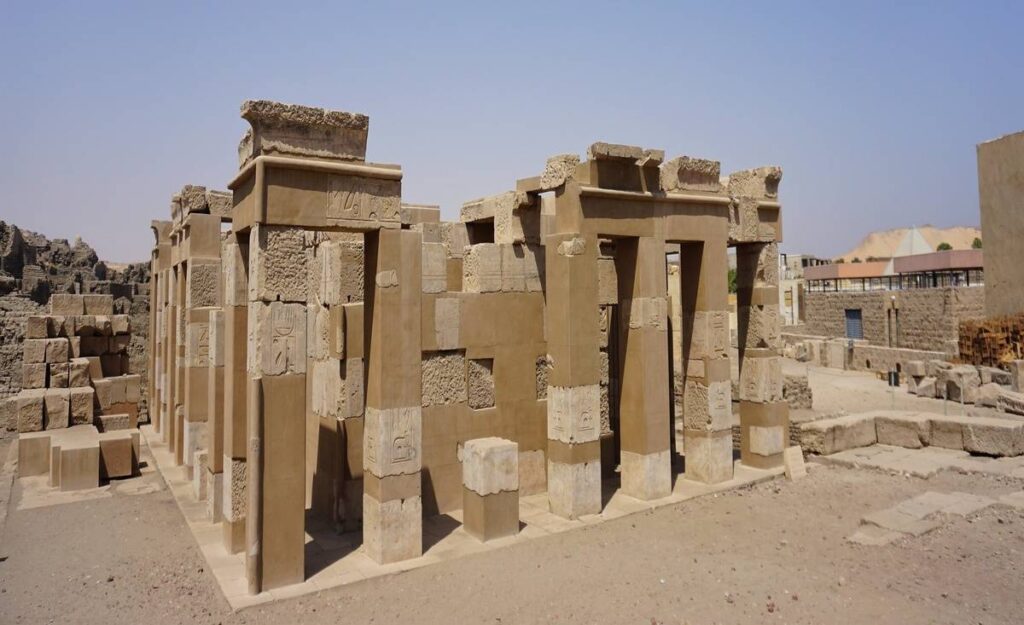
The main deity here was Khnum, the ram-headed creator god who was thought to fashion humans on a potter’s wheel and to control the Nile’s inundation. A major Temple of Khnum once stood on the southern part of the island, and although only ruins remain today, you can still walk among column bases, scattered blocks, and later additions from the Ptolemaic and Roman periods.
Alongside Khnum, the goddesses Satet and Anuket were worshiped as protectors of the southern frontier and guardians of the Nile’s flow. The Temple of Satet, in particular, has been excavated and partially reconstructed, revealing layers from the Old and Middle Kingdoms through to later rebuildings, with shrines, courtyards, and offering places that hint at the complex rituals once performed here.
When you walk the temple remains today, it can feel a little fragmented, but if you pause and imagine festivals marking the arrival of the flood, priests taking measurements at the nilometer, and processions moving between shrines, the layout starts to make more sense. In practice, a good way to approach it is to visit after you have read a short historical overview or a more focused piece on the history of Elephantine Island and its temples, so that the broken stones feel less anonymous.
Elephantine Island archaeology: digging into the layers
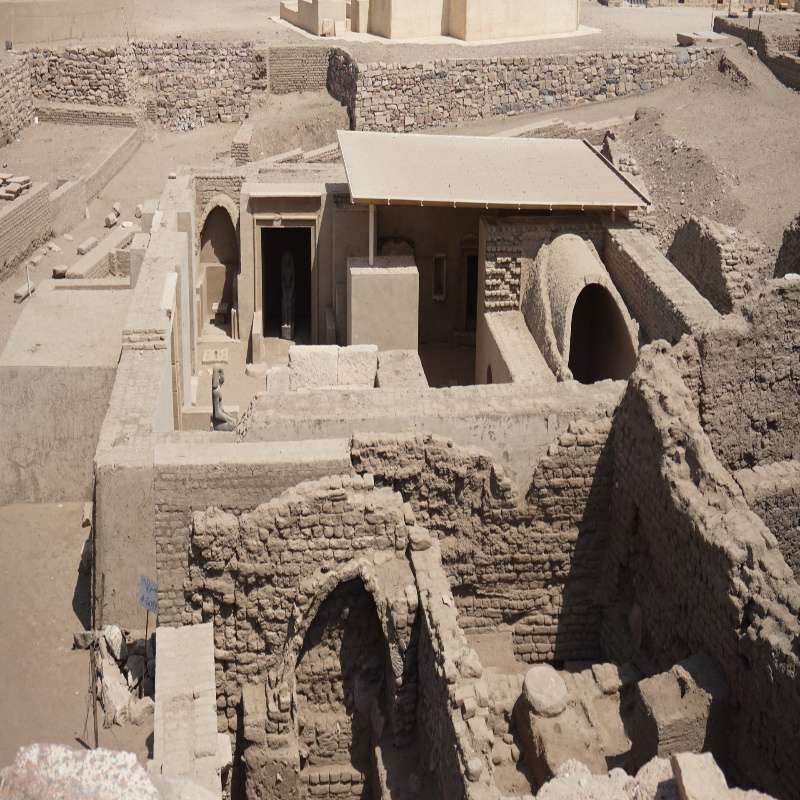
For archaeologists, Elephantine Island is a goldmine because so much of its history lies preserved in overlapping layers of settlement, fortification, and religious building. For you as a visitor, that can mean the ruins sometimes look more like low walls and mounds than the soaring columns of places like Karnak, yet the stories behind them are arguably just as compelling.
Since the 1960s, German and Swiss archaeological missions have carried out systematic excavations on the island, carefully uncovering domestic houses, administrative buildings, shrines, gateways, and sections of city walls from different periods. These digs have revealed how the island’s community adapted over time to military needs, changing river levels, and shifts in political power, and they have produced a wealth of inscriptions and small finds that shed light on everyday life.
Some of the most important discoveries include parts of the Old Kingdom fortress, remnants of the town that housed soldiers and officials, and numerous small chapels dedicated to local deities. Many of the objects unearthed, from statues and offering tables to pottery and tools, now appear in the Aswan Museum on the island and in larger collections in Cairo and abroad.
Because work is ongoing, you may notice cordoned-off areas, excavation trenches, or archaeologists and workers in some sections of the island. This can feel slightly disruptive but it is actually a sign that the place is still revealing new information, and it gives Elephantine a slightly “alive” archaeological atmosphere rather than a frozen, finished site.
The Nilometer: reading the Nile’s moods
One of the most evocative single structures on Elephantine Island is the ancient nilometer, a set of stone steps descending into a channel connected to the river, with inscriptions and markings along its walls. This device allowed priests and officials to measure the height of the Nile during the annual inundation, and those measurements in turn influenced everything from tax levels to predictions of famine or abundance.
The nilometer on Elephantine is among the oldest known in Egypt, with modifications dating into Roman times, and it stands as a very concrete reminder of how closely the entire society depended on the river’s behavior. Today you can walk down part of it, look at the water line, and imagine officials anxiously checking levels that would determine how much grain would grow and how many people would go hungry or prosper in the year ahead.
From a visitor’s perspective, the nilometer is also a helpful landmark that makes the idea of “measuring the Nile” much more real, especially if you pair it with a practical guide on how to visit Elephantine Island in Aswan and plan your walk so that you arrive when the light is good for photos. It is easy to overlook if you are rushing, so it is worth giving yourself a few unhurried minutes there.
Modern life on Elephantine Island: Nubian villages and daily rhythm
Elephantine Island is not a museum piece; it is a lived-in place, home to Nubian communities whose villages stretch along the middle and southern sections of the island. Houses are often painted in bright colors, with geometric patterns and simple decorations, and narrow lanes wind between them down toward the riverbanks.
Walking through these villages is, for many visitors, as memorable as seeing the ancient ruins. You may meet children playing football in dusty clearings, hear music from a doorway, or be invited, sometimes a bit insistently, to look at handicrafts or sit for tea. It can feel a little commercial in pockets, but there are still plenty of quiet corners where daily life goes on with only a passing nod to tourism.
Some families run guesthouses or homestays, and staying overnight on the island gives you a chance to experience the evening calm after the day boats leave and the river traffic dies down. If this appeals, it is worth reading a more focused piece on Nubian life and homestays on Elephantine Island before choosing where to stay, especially if you care about supporting locally owned places in a thoughtful way.
Key Elephantine Island attractions you should not miss
The Aswan Museum on Elephantine Island
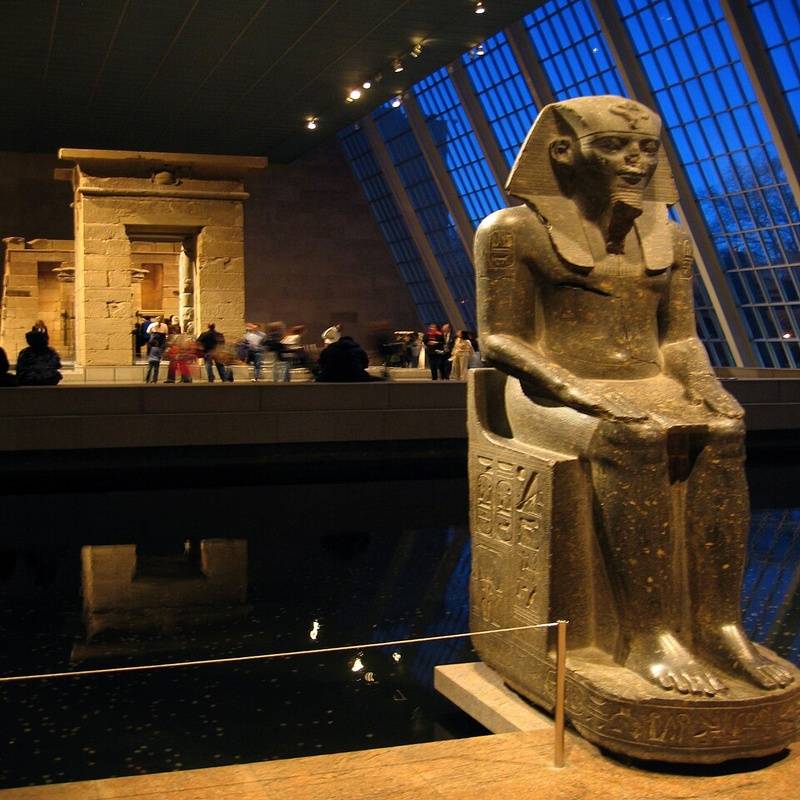
The Aswan Museum, located near the southern tip of Elephantine Island, is relatively small but densely packed with objects that help make sense of what you see outside among the ruins. Its collection includes statues of Khnum and other deities, inscribed blocks from temples, stelae, pottery, and everyday items spanning Pharaonic, Greco-Roman, and later periods.
The museum also displays artifacts that speak to the region’s broader history, including Nubian pieces and items from nearby sites around Aswan. Because it is compact, you can see most of it in under an hour, but it rewards a slower look, especially if you are interested in the more intimate side of archaeology rather than just monumental architecture.
Temple remains and viewpoints
Scattered around the island are the remains of the Temple of Khnum and the Temple of Satet, along with other smaller shrines and structural fragments. These remains can look a little confusing if you are expecting towering columns and intact halls, but if you take time to look for carved reliefs, column bases, and reused blocks, you begin to see how many phases of building have been layered here.
Several spots on Elephantine Island also offer lovely views back to the city of Aswan, out toward the desert hills, or up and down the Nile with feluccas gliding by under late afternoon light. These viewpoints are not heavily signposted, so part of the pleasure is simply wandering and seeing where the paths and lanes take you, as long as you remain respectful of private homes and fields.
Planning your visit: best time, duration, and simple itineraries
Aswan is generally warm to hot for much of the year, with particularly intense heat in summer, so the best time to visit Elephantine Island is usually between late autumn and early spring, roughly October through April. Even then, midday sun can be quite strong, so early mornings and late afternoons are usually the most comfortable and atmospheric times to explore.
For many travelers, a half-day on the island is enough to see the main archaeological areas, the nilometer, and at least one Nubian village at a relaxed pace. If you enjoy slower travel, photography, or simply sitting by the water, a full day or an overnight stay gives you more space to let the place sink in, especially once day-trippers have gone.
A simple history-focused itinerary might look like this: morning ferry crossing, visit to the Aswan Museum, walk through the temple ruins and nilometer area, then a slow wander back through village lanes to the ferry. A more laid-back plan could start later in the day, focus on the villages, a café stop, and a sunset felucca ride circling around Elephantine Island after you return to Aswan.
Practical tips: costs, safety, etiquette, and photography
Exact prices change over time, but in general the public ferry is inexpensive, while private boats cost more but can be negotiated depending on the length of the trip and whether you add a short sail around the island. Entry tickets for archaeological areas and the museum may be sold together or separately, and it is always a good idea to check current details with your hotel, a local travel agency, or updated resources before you go.
In terms of clothing, light, breathable fabrics are best, and it is respectful to dress modestly with shoulders and knees covered, especially when walking through Nubian neighborhoods. Comfortable shoes are essential, because paths can be uneven and sandy, and a hat, sunglasses, and water bottle will make your time in the sun much easier.
Safety-wise, Elephantine Island is generally considered a calm and friendly place, though, as anywhere, it is sensible to keep an eye on your belongings and avoid flaunting valuables. You will likely encounter offers for boat rides, souvenirs, or informal guiding; a polite “no, thank you” usually works if you are not interested, and small tips for services you do accept are appreciated but do not need to be excessive.
Photography is usually fine in open areas, ruins, and along the river, but it is good manners to ask before photographing people, especially in smaller communities. Some families may be happy to pose, others less so, and a respectful approach tends to lead to better, more genuine moments anyway.
Combining Elephantine Island with the rest of Aswan
Many visitors fold Elephantine Island into a broader Aswan stay that also includes Philae Temple, reached by boat on its own island, the Unfinished Obelisk in the granite quarries, and the Aswan High Dam, which reshaped the entire region’s relationship with the Nile. The Nubian Museum on the east bank is another highlight, offering a deeper look at Nubian history and culture that complements what you see on Elephantine itself.
If you are planning a Nile cruise, Elephantine Island can work well as either an introductory first stop or a slower final day before you head onward. Using a detailed Elephantine Island travel guide as your base, then layering on more specific resources like a practical “how to visit” guide or an in-depth history article, gives you a flexible framework to adjust plans as you learn more.
Conclusion: why Elephantine Island stays with you
In the end, Elephantine Island is not defined by a single monument or postcard shot so much as by the way everything overlaps: ancient fortresses, Nile gods, the patient stone of the nilometer, Nubian homes, and the wide river sliding past. It is the kind of place where you might start out chasing “sights,” then find yourself content just sitting in the shade, listening to the water and the faint sounds of the village behind you, and realizing that this quiet, layered edge of Egypt has slipped under your skin.
If you give yourself time, use a thoughtful guide to elephantine island and its surroundings, and perhaps connect your visit with a deeper look at its history, temples, and Nubian life, the island can become more than just a stop between bigger names on the Nile. It becomes a small anchor in your memory of Egypt, a place where living communities and very old stones still share the same narrow strip of land in the middle of the river.