Things to do in Antigua Guatemala (by neighborhood)

If you’re looking for things to do in Antigua Guatemala, you can go two ways. You can treat it like a checklist and sprint from landmark to landmark. Or you can do what I think most people actually enjoy more here: pick a few “anchor” sights, then wander between them slowly and let the city fill in the gaps.
This guide is organized by area so it’s easy to use in real life—especially if you only have a day or two and don’t want to zig-zag across town. And if you want the bigger picture (history, planning, what to skip), keep the main guide open too: Antigua Guatemala.
Before you start: how to use this list
Antigua is small, walkable, and laid out in a grid, so you’re rarely “far” from anything. Still, the cobblestones can slow you down, and the altitude is just high enough that you’ll notice it if you’re rushing. I’d plan your day around two or three core stops, then be a little loose with the rest.
- If you care about photos, do your “iconic” spots early or late for softer light and fewer people.
- If you care about atmosphere, build in breaks—coffee, a courtyard, a bench—so the city doesn’t turn into a blur.
- If you’re unsure where to begin, begin at the center. Antigua makes sense from the inside out.
Central Antigua (around Parque Central)
This is the easiest area for a first visit because it’s where Antigua feels most “itself”: busy but contained, historic but lived-in. If you only have a half-day, spend it here and you’ll still leave with a solid sense of the city.
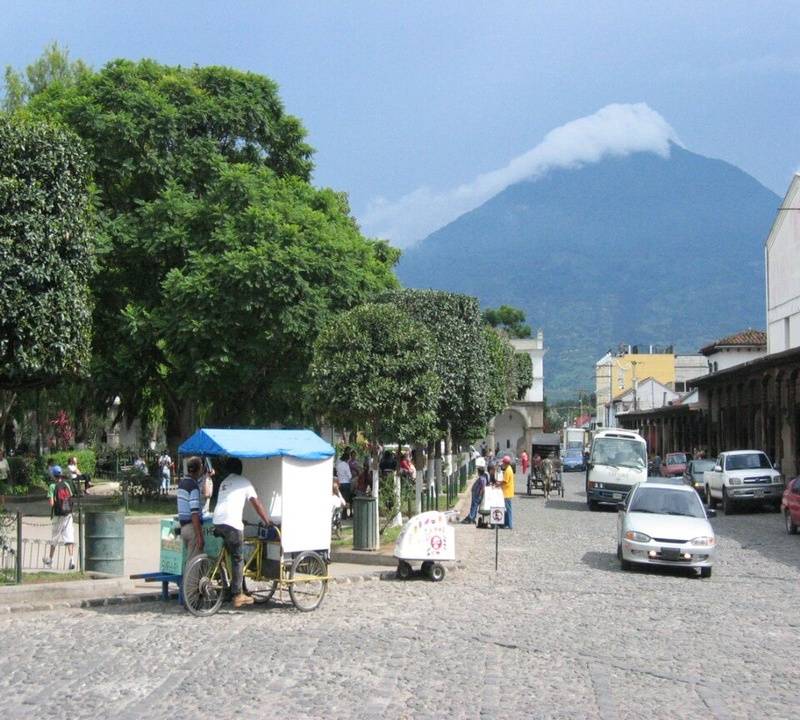
Parque Central
Parque Central is your orientation point. It’s the kind of place where you can arrive slightly overwhelmed, sit down for ten minutes, and suddenly feel like you know what you’re doing. Watch the rhythm of the square, then pick a street and go—Antigua rewards small, spontaneous turns.
If you’re building your own route, it helps to think in loops: circle back to the park every so often, especially if you’re exploring without a map. That way you won’t spend your day “navigating,” you’ll spend it noticing.
Wander the grid streets on purpose
I know “wander” can sound like a non-recommendation, but in Antigua it’s honestly one of the best activities. The grid pattern makes it easy: choose a direction, walk until something catches your eye, then turn. Doorways, courtyards, little fountains, street textures—this is the slow pleasure of Antigua.
If you want the context behind why the city is laid out this way (and why it looks so preserved), the pillar guide covers the UNESCO side of it in plain language: Antigua Guatemala.
Shop thoughtfully (crafts, textiles, and small souvenirs)
Central Antigua is full of shops selling textiles, ceramics, jewelry, and gifts. Some of it is beautiful. Some of it is, well, easy to buy in a hurry and regret later. My suggestion is simple: decide what you want before you start shopping, then buy fewer items you’ll keep.
If you’re unsure, walk away and come back. Antigua is compact. You’ll probably find the same shop again, and your second decision is usually the better one.
North of the center: the Santa Catalina area
This is where you’ll find the most recognizable photo moment in Antigua. It’s also where you can accidentally spend an hour trying to get “the” shot. Both experiences are normal, I think.
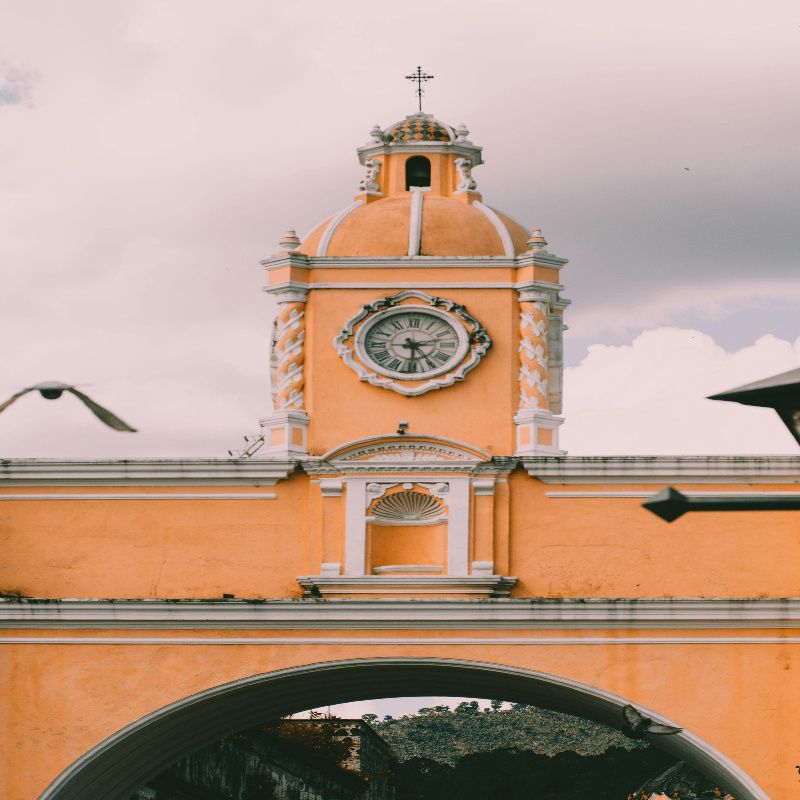
See the Santa Catalina Arch, but be picky about timing
The Santa Catalina Arch is famous for a reason: it’s the iconic landmark that tends to show up any time Antigua is mentioned. It’s also the spot that can feel a bit crowded in the middle of the day.
If you want it to feel calm, go early morning or late afternoon. The light is gentler, the street is less packed, and you can look up and around without feeling like you’re standing in the middle of someone else’s photo session.
If you’re the kind of traveler who likes a little background story with your landmarks, the Arco de Santa Catalina has its own history as part of the former convent complex and has become a symbol of the city. (It’s not just a pretty arch.)
Make it a photo walk, not a photo stop
Here’s a small mindset shift: don’t treat the arch like a single “stop.” Use it as the center of a short photo walk. Turn down side streets, look for framed volcano views, and pay attention to what’s happening at street level—door colors, balconies, textures, people heading to work. That’s where your photos start looking like your trip, not a copy of a template.
And yes, you can still get the postcard shot. Just don’t let the postcard shot be the only thing you do.
Above town: Cerro de la Cruz and viewpoints
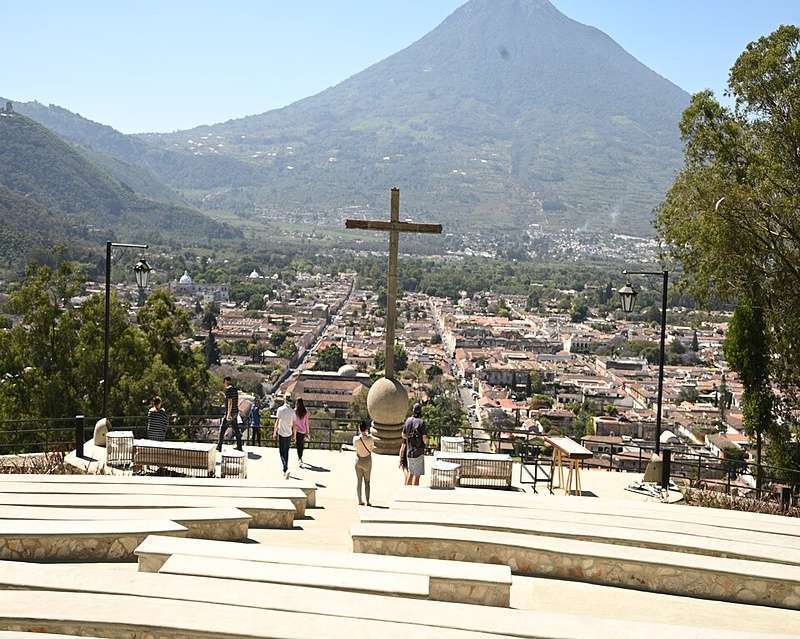
If you want one big “wow” view that explains Antigua in a single glance, go up. You’ll see the grid, the rooftops, and the volcano backdrop when the weather behaves. It’s a short effort for a high payoff.
Walk up to Cerro de la Cruz for the classic panorama
Cerro de la Cruz is the classic viewpoint above Antigua, with sweeping views over the city and Volcán de Agua behind it on clear days. The climb is short, and much of it is on stone steps—still a workout if you’re not used to hills, but very doable if you take your time.
I’d go earlier for clearer skies and softer light. Afternoon haze is a real thing here, and it can flatten the view. If you’re planning your whole day around this viewpoint, mornings usually make life easier.
For the step-by-step route, timing tips, and what to expect once you reach the top, use the dedicated guide: Cerro de la Cruz in Antigua Guatemala.
Make viewpoints your “bookends”
This is a practical trick that makes a day in Antigua feel well-paced: do a viewpoint early, then return to the city for wandering, coffee, and ruins; then do another small viewpoint moment later if you feel like it. Even one viewpoint can work as a “bookend,” honestly. It gives your day a shape.
If you’re the itinerary type (or traveling with someone who is), you’ll probably enjoy the more structured plan here: Antigua Guatemala itinerary.
Ruins and historic spaces (throughout the city)
Antigua’s ruins aren’t decorative props. They’re a consequence of living in an earthquake-prone region and of the city’s major destruction in 1773. The effect today is striking: monumental spaces that are partially intact, partially open to the sky, and very easy to linger in if you let yourself slow down.
Let the ruins be ruins (and don’t rush them)
The most common mistake with ruins in Antigua is trying to see too many of them too fast. They’re not a “quick photo” experience—at least not if you want them to feel like more than scenery. Give each site time. Notice how light enters, how sound changes, how plants reclaim edges, how the city noise fades when you step inside.
Also, be a little cautious about turning sacred or historic places into pure backdrops. It’s a subtle line, and people cross it without meaning to. But if you care about travel that feels respectful, it’s worth keeping in mind.
Balance history with something ordinary
Here’s a mild contradiction that I think is true: Antigua feels most historic when you mix the “big” sights with something normal. Sit in a courtyard. Have a quiet coffee. Browse a small shop without buying anything. When you alternate between the monumental and the everyday, the city stops feeling staged.
If you want the deeper context—why UNESCO lists Antigua, what integrity concerns have been raised, and why preservation rules matter—jump back to the pillar guide: Antigua Guatemala.
Food, coffee, and breaks that improve your day
Antigua is the kind of place where a well-timed break can be as memorable as an attraction. Not always. But often. And after a few hours on cobblestones, your body will probably agree.
Take a coffee break on purpose
Antigua’s cafe culture can feel surprisingly polished. Some travelers love it. Some feel conflicted about it, especially when they notice how tourism can reshape historic districts. Both reactions are fair.
Still, a coffee break is one of the easiest ways to enjoy the city without over-scheduling. My personal rule is simple: pick a place with a courtyard if you can, sit long enough to feel your pace drop, then head out again when you’re genuinely ready—not when you feel like you “should” move on.
Use lunch as your reset button
If your morning is all walking and photos, lunch can become the moment you stop making impulsive decisions. You rehydrate. You look at your map (if you’re using one). You decide what’s worth doing next. It sounds basic, but I’ve had plenty of travel days saved by a calm lunch.
Sample routes (so you can stop thinking about it)
These routes keep things close together, so you spend your time experiencing Antigua instead of commuting across it.
Half-day: “classic center” loop
- Start at Parque Central.
- Walk the grid streets with a loose loop toward the Santa Catalina area.
- See the Santa Catalina Arch in softer light if you can (early or late).
- Finish with a courtyard coffee break.
Full day: “view + center + ruins” rhythm
- Morning: Cerro de la Cruz for the panorama.
- Late morning to afternoon: Parque Central, arch area, and a slower wander through ruins/historic spaces.
- Evening: Dinner, then a short walk when the streets feel calmer.
If you want a cleaner, hour-by-hour version (and a plan that works well for first-timers), the Antigua Guatemala itinerary is built exactly for that.
Common mistakes (that are easy to avoid)
- Trying to do everything: Antigua looks small, but the sensory load adds up. Pick fewer things and enjoy them.
- Only seeing “icons”: The arch and viewpoints are great, but the side streets and courtyards are what make the city feel personal.
- Skipping breaks: A coffee or lunch reset isn’t wasted time—it’s what keeps the second half of your day enjoyable.
- Rushing the ruins: If you give them time, they stop being backdrops and start being experiences.
Conclusion: the best things to do in Antigua Guatemala are often the slower ones
The best things to do in Antigua Guatemala aren’t always the most dramatic. Sometimes they’re small: a quiet stretch of street, the sound of footsteps on cobblestones, a courtyard that makes you pause, the moment the volcano view clears and you catch yourself staring.
Use this neighborhood guide to choose your anchors, then let yourself wander between them. And if you want the broader context and planning advice that ties everything together, head back to the main guide: Antigua Guatemala.