Colorado Ski Towns Near Denver
If you’re trying to plan a mountain trip without turning the first and last day into a full transportation project, colorado ski towns near Denver are usually the smartest place to start. That sounds obvious, perhaps, but it matters more than people think. A ski trip can look amazing on paper and still feel oddly draining if you spend too much of it in a rental car, crawling along I-70, wondering whether the pretty town you picked was really worth the extra hassle.
This guide is for travelers who want a Colorado ski-town trip that feels manageable. Maybe it’s your first ski vacation in the state. Maybe you only have a long weekend. Maybe you’re traveling with kids, beginners, or one friend who says they’re “easygoing” and then becomes very not easygoing the moment the drive gets long. It happens. The goal here is to help you choose a base that gives you mountain access without making the logistics the whole story.
If you want the broader big-picture guide first, start with my main colorado ski towns article. This post is narrower by design: less romance, more practicality, and honestly that can be exactly what saves a trip.
Why staying near Denver changes the whole trip
Most Colorado visitors fly into Denver International Airport (DEN), and from there the mountain decision becomes a trade-off between convenience and destination feel. The Colorado Department of Transportation describes the I-70 Mountain Corridor as a key gateway to the state’s ski resorts and mountain communities, which is true—but “gateway” can still mean traffic, weather delays, and a longer-than-expected day if you time it badly. Colorado’s I-70 corridor connects major ski areas and communities such as Vail and Breckenridge, making it practical, but also very popular.
That’s why shorter-access ski towns can be such a relief. When your trip is only three or four days, cutting a couple of hours of friction can matter more than choosing the “most iconic” destination. I think people underestimate this because, in theory, all mountain drives sound scenic. In practice, scenic gets old when everyone is hungry and it’s getting dark.
What counts as “near Denver” for a ski-town trip?
For this article, “near Denver” doesn’t mean thirty minutes away. It means realistically reachable for a weekend trip from Denver or DEN, usually with a drive that feels manageable in normal winter conditions. That still leaves a range. Some places are very close to ski access but don’t really feel like full ski towns. Others are a bit farther but reward you with a better main street, more dining, or a more satisfying after-ski atmosphere.
So, yes, this is partly about mileage—but not only mileage. It’s also about whether you arrive and feel settled quickly, whether you have enough around you when the skiing stops, and whether the whole thing feels like a trip you’d actually want to repeat.
How to choose the right base
Decide whether you want a real town or a simple resort setup
This distinction matters a lot near Denver because some of the most convenient places are practical bases rather than postcard towns. A true town usually gives you a walkable center, independent businesses, and a bit more personality after the lifts close. A resort base area may be easier for skiing, but it can feel narrower as a travel experience.
If you’re not sure which matters more, read my guide to colorado ski towns vs ski resorts. It clears up a confusion that catches a surprising number of travelers, especially on their first Colorado trip.
Be realistic about winter driving
The state’s mountain routes are beautiful, but they’re not the kind of drive you want to take lightly just because you’ve rented an SUV. CDOT’s I-70 travel pages specifically warn that the mountain corridor is a challenging drive and recommend checking current conditions and traction requirements before traveling.If someone in your group hates driving in snow, plan around that early instead of pretending it will somehow be fine.
There are also non-driving options, depending on where you stay. Commercial shuttles serve many mountain destinations from DEN, and Colorado’s transportation network includes mountain bus options to some ski areas and gateway towns. One of the quiet advantages of basing yourself in the right town is that you can reduce the amount of daily driving once you arrive.
Think about trip length before you think about prestige
If you have seven days, a longer transfer can be justified. If you have two and a half days, maybe not. There’s no prize for spending the first evening and last morning in transit just because the town name sounds glamorous. Sometimes the best ski town near Denver is simply the one that lets you get outside faster and stress less.
The best colorado ski towns near Denver
These are not ranked in a rigid “number one to number five” way, because different travelers want different things. A family with young kids, a couple on a short getaway, and a group of advanced skiers do not need the exact same town. That would be too neat. And not really how travel works.
Frisco
Best for: Travelers who want flexibility, easy access to multiple resorts, and a town that feels useful as well as appealing.
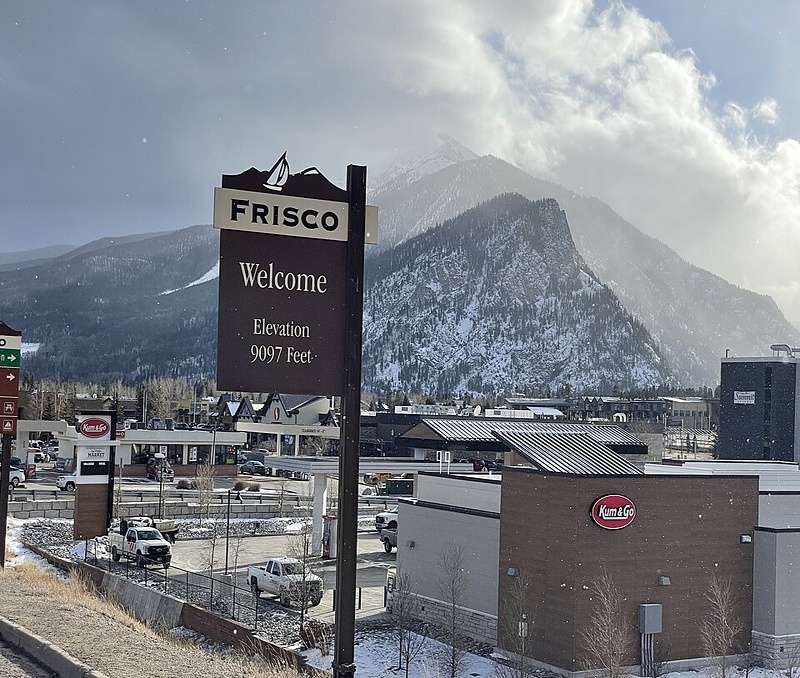
Frisco is one of the smartest bases for a near-Denver ski trip, especially if your group can’t agree on one mountain. It sits in Summit County with straightforward access to several major ski areas, and the town itself has enough restaurants, shops, and general mountain-town energy to feel like a real place rather than just a sleeping spot. It may not be as instantly famous as Breckenridge, but in practical terms, it often makes more sense.
What I like about Frisco is that it gives you options without forcing you into one resort ecosystem. That can be useful when weather changes, when lift lines get ugly, or when half your group wants an easier day. It’s a very “workable” base, which is not the most glamorous praise, but for an actual trip? Workable is underrated.
Breckenridge
Best for: Travelers who want a classic ski-town look and don’t mind popularity if the atmosphere delivers.
Breckenridge is often the near-Denver choice for people who want the mountain trip to feel like a mountain trip. There’s a historic core, a recognizable main street, plenty of dining and lodging, and enough life outside the resort that non-skiers won’t feel stranded. It can be busy—very busy, at times—but that’s partly because it does a lot of things well.
The trade-off is that its popularity is not theoretical. On weekends and peak periods, you feel it in parking, sidewalks, dining reservations, and general pace. Still, if your priority is a real ski-town experience rather than maximum efficiency, Breckenridge earns its place on the shortlist.
Dillon and Silverthorne
Best for: Budget-conscious groups, practical planners, and travelers who care more about access and value than postcard charm.
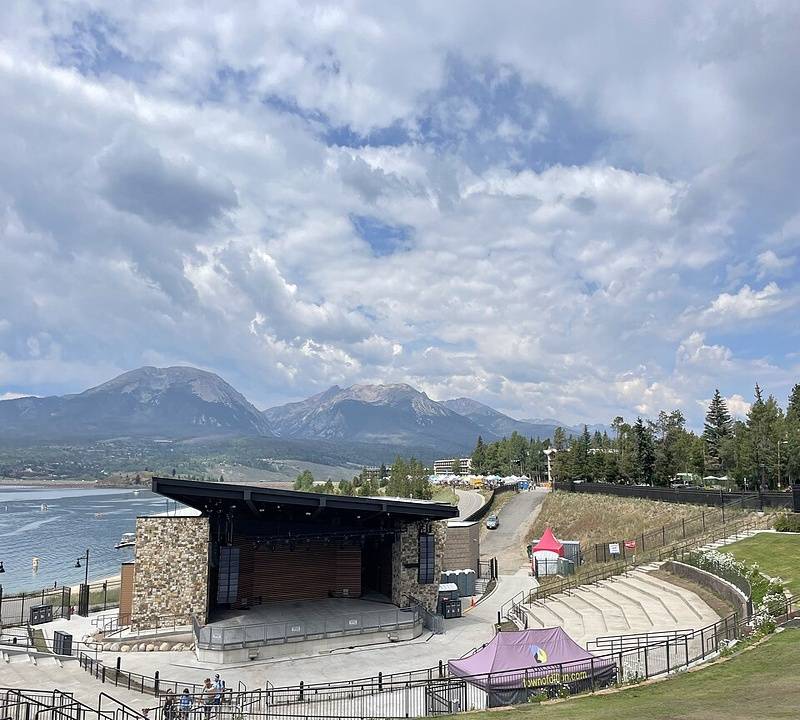
I’m putting Dillon and Silverthorne together because many travelers compare them as neighboring Summit County bases. Neither has the iconic image of Breckenridge, but both can be excellent if your focus is logistics. You’re close to multiple ski options, everyday services are easier to find, and lodging can be more varied than in the most famous resort cores.
Silverthorne in particular works well for travelers who want the “base camp” version of a ski trip. You can settle in, stock up on groceries, and then move around the region with more freedom. Dillon adds lake views and a quieter feel. Neither town is trying too hard to impress you, and that can actually be part of the appeal.
Winter Park
Best for: Ski-first travelers, short trips, and people who want less scene and more mountain focus.
Winter Park is one of the strongest options for travelers who care more about getting on snow than curating a big town experience. The surrounding area can work very well for a weekend because the trip is relatively straightforward, and once you’re there, the rhythm of the trip tends to be simple. Ski, eat, recover, repeat. Honestly, that’s enough for a lot of people.
If you want a highly walkable historic town with lots of nightlife, Winter Park may feel a little restrained. If you want a relaxed Colorado mountain trip that doesn’t ask you to perform your vacation, it can be a very good fit.
Georgetown
Best for: Travelers who want a smaller historic feel and easy access to nearby skiing without committing to a major resort town.
Georgetown is not always the first town people think of in this conversation, which is probably why it deserves a mention. It has a more old-Colorado feel than some of the purpose-built resort areas, and it can work nicely for travelers who want to stay somewhere with character while keeping driving distances relatively reasonable.
This is not the choice if you want the broadest dining scene or the most obvious ski-town energy. But if your taste runs quieter, simpler, and a little more historic, Georgetown can feel refreshingly unforced.
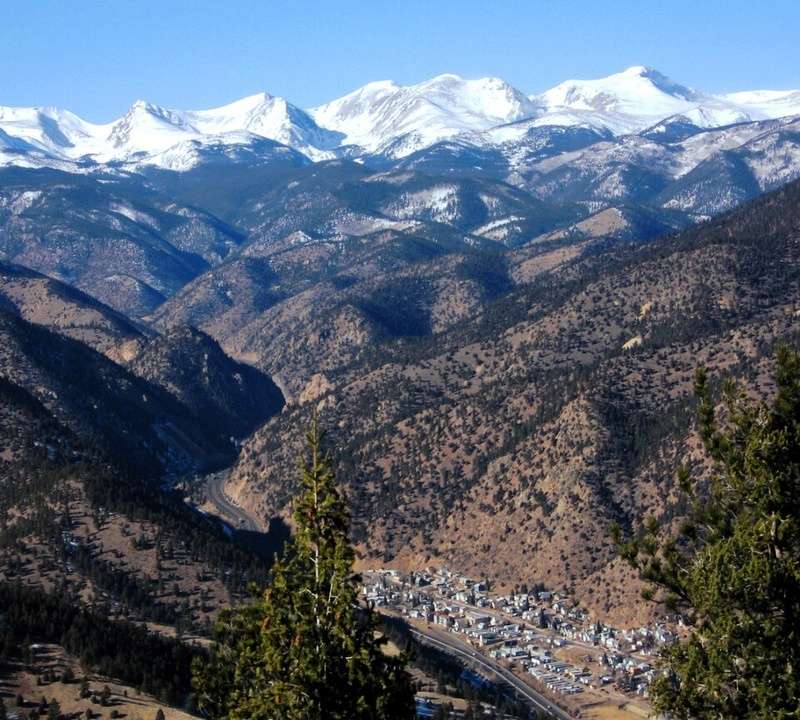
Idaho Springs
Best for: One-night stops, very short trips, or travelers who want to break up the mountain drive.
Idaho Springs sits closer to Denver than the classic Summit County ski bases, which makes it appealing if you want to get out of the city quickly and have a mountain-town feel without going too deep into the corridor on night one. I wouldn’t call it the ideal all-purpose ski base for every traveler, but for a fast weekend, it can make the logistics gentler.
It works best when your trip is flexible and you don’t mind driving onward to ski each day. Think of it less as the complete ski-town package and more as a strategic foothold.
Which town is best for your trip style?
For the easiest all-around weekend
Frisco is hard to beat. It balances access, services, lodging flexibility, and a pleasant town feel better than many places that get more attention. If your group includes mixed skill levels or indecisive planners, this is often the safest bet.
For the most classic ski-town atmosphere
Breckenridge probably wins that category near Denver, even if it comes with the most obvious popularity tax. You feel like you’re in a destination, not just near one.
For practical value
Dillon and Silverthorne usually deserve a hard look. They may not be the most romantic names on a Colorado itinerary, but they can make the numbers work—and sometimes that’s what turns a maybe-trip into an actual trip.
For a ski-first trip
Winter Park makes sense for people who care more about time on the mountain than browsing shops after dark. It’s efficient in a satisfying way.
For a quieter, less hyped stay
Georgetown and, to some extent, Idaho Springs appeal to travelers who want some mountain atmosphere without the full resort-town machine. They’re not for everyone. Still, they can be exactly right.
Transportation tips that actually matter
Try to avoid arriving at DEN and immediately assuming the rest of the trip will unfold smoothly on instinct. Mountain trips reward a little planning. If you’re renting a car, check weather and road conditions before departure and again on the morning of travel. CDOT recommends using its travel tools before driving the corridor, especially in winter conditions.
If you don’t want to drive, look for towns with simple shuttle access or easy onward transit. This is where the “best ski town” question starts to overlap with the broader planning advice in my main Colorado ski towns guide. A town can be wonderful in theory and still wrong for your trip if getting there feels like a chore.
And one more thing: leave margin. The most relaxed ski trips usually have a buffer between landing and dinner, between checkout and the flight home, between “we should be fine” and “actually this is taking longer than expected.” Winter travel has a way of exposing optimistic scheduling.
Common mistakes when choosing colorado ski towns near Denver
Picking based on name recognition alone
Well-known towns are often well known for a reason. But fame doesn’t automatically equal fit. Sometimes the better move is the slightly less famous base that solves more of your actual problems.
Underestimating the weekend effect
A town that feels easy on a Tuesday can feel much less easy on a Saturday. Traffic, parking, check-in delays, dining waits—they all stack up. If you’re traveling over a weekend, build your expectations around that, not around the most optimistic version of the trip.
Assuming “close” means “simple”
A shorter distance does not always guarantee an easier experience. Weather, traffic timing, and where exactly you’re staying within a town all matter. “Near Denver” is a useful filter, but it’s not the whole answer.
A simple way to decide
If you want the easiest answer, here it is: choose Frisco for flexibility, Breckenridge for classic ski-town atmosphere, Dillon or Silverthorne for practical value, and Winter Park for a ski-first weekend. Georgetown and Idaho Springs make sense if you want a smaller or more strategic base and don’t need the full destination-town package.
That’s the simplified version. The more honest version is that the right choice depends on whether your group cares more about town feel, budget, transfer time, or daily convenience. Usually one of those matters just a little more than the others, even if nobody says it right away.
If you’re deciding between a true town and a slopeside setup, the next useful read is Colorado ski towns vs ski resorts. And if you want the wider landscape beyond just near-Denver options, go back to the full Colorado ski towns guide for the bigger picture.