Things to do in New Orleans french quarter
If you’re looking for things to do in new Orleans french quarter, there’s a decent chance you’re trying to solve two problems at once. First, you want the essentials—the places everyone talks about, the corners that actually feel like New Orleans. Second, you want to avoid wasting half a day in a neighborhood that can be wonderful, confusing, crowded, and a little over hyped in spots. That’s fair. The French Quarter is the city’s oldest neighborhood, and while the official visitor guides lean into the big names like Jackson Square and Bourbon Street, they also quietly point out that there’s much more here than the obvious postcard version.
This guide is for first-time visitors, repeat travelers who want a smarter plan, and honestly anyone who has ever looked at a long “top 25” list and thought, “Yes, but what should I actually do first?” I’m going to keep it practical. Not stiff, hopefully. Just useful.
If you want the broader overview before you zoom in on this neighborhood, start with the main pillar guide here: things to do in new orleans. It gives you the city-wide version, while this article stays tightly focused on the Quarter itself.
Why the French Quarter still deserves your time
The French Quarter can feel like a contradiction. Parts of it are incredibly touristy, yes, and Bourbon Street tends to dominate people’s expectations. But the neighborhood is also where a lot of visitors first understand the city’s rhythm: narrow streets, balconies, hidden courtyards, musicians appearing out of nowhere, and small museums tucked between bars and souvenir shops.
New Orleans & Company’s official French Quarter attractions page makes this point pretty clearly, even if a bit indirectly. It says the must-dos include Jackson Square and at least a quick walk down Bourbon Street, but it also emphasizes museums, guided walking tours, cultural stops, and smaller hands-on experiences beyond the obvious nightlife. That matters, because if you treat the whole neighborhood like one long party strip, you’ll miss most of what makes it interesting.
Things to do in New Orleans French Quarter if it’s your first visit
If this is your first time here, I would not overcomplicate it. The Quarter is best experienced in layers. Start with the well-known landmarks, then let yourself drift a little.
Start with Jackson Square
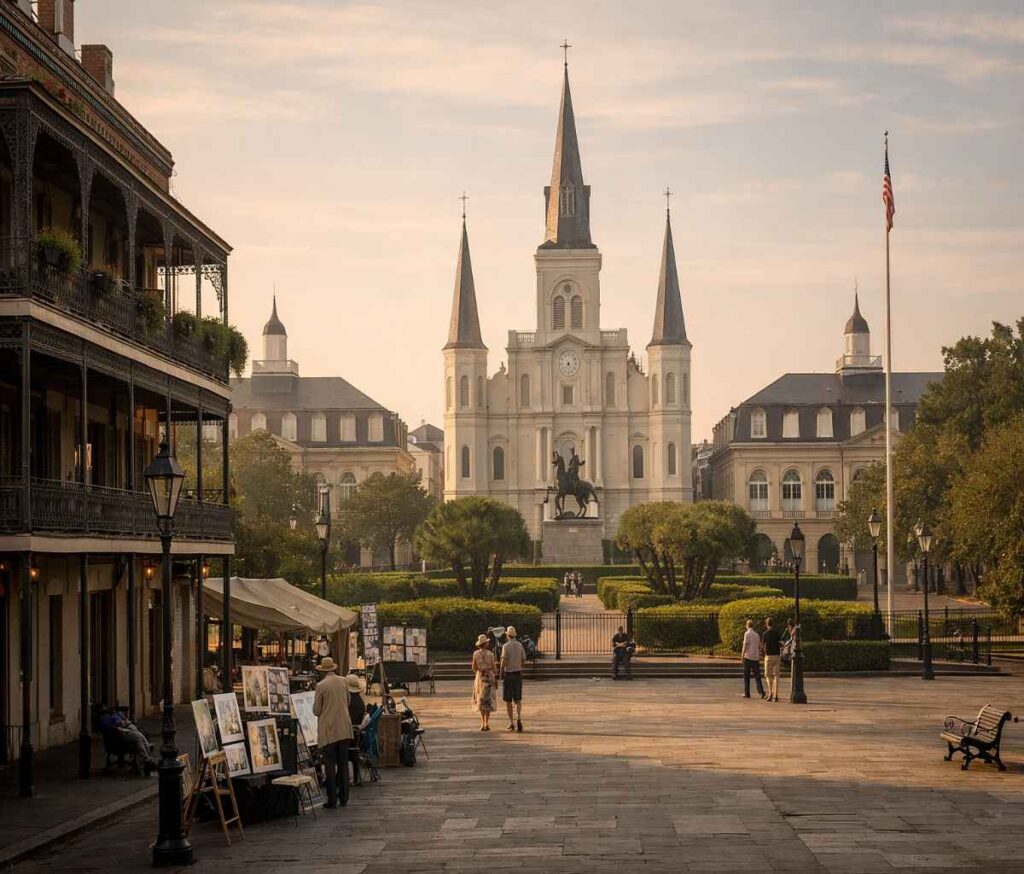
If the French Quarter has a center of gravity, it’s Jackson Square. The official neighborhood attractions page lists it as one of the must-dos, and that tracks with reality. It’s where people slow down, look up, take photos, and, maybe without meaning to, start lingering.
What I like about Jackson Square is that it works on two levels. It’s visually iconic, obviously, but it also feels lived-in. You’ll usually find artists, performers, and a rotating stream of visitors who are all trying to take in the same view in slightly different ways. Spend a little time here rather than just grabbing a photo and moving on. The difference is small, but it changes the day.
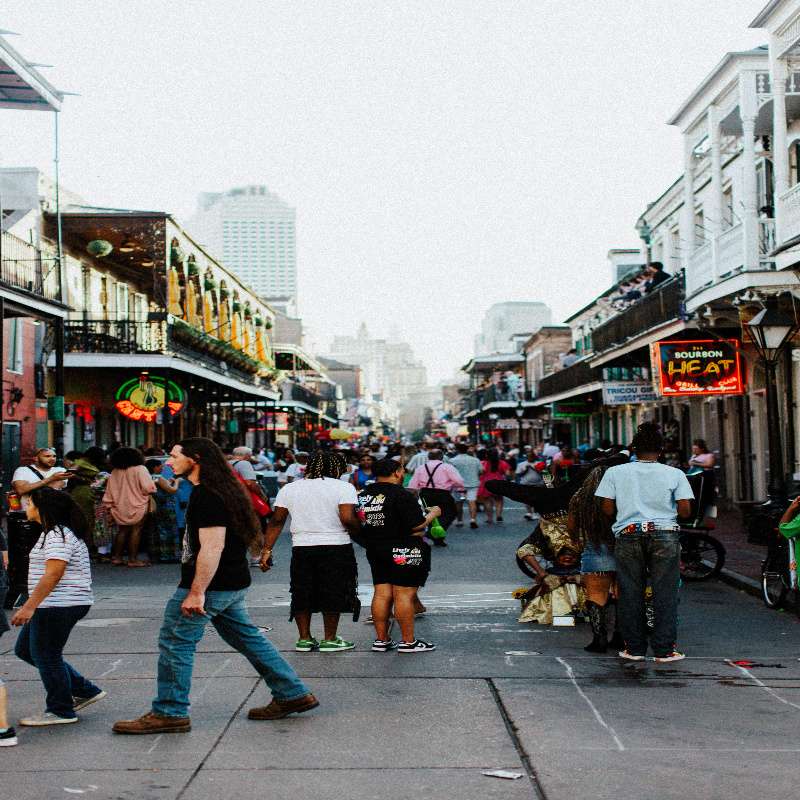
Walk Bourbon Street once—then decide how you feel
Official French Quarter guidance more or less says the same thing many travelers eventually conclude on their own: take at least a quick walk down Bourbon Street. I think that’s right. You don’t need to pretend it’s not part of the story.
That said, Bourbon is rarely the whole story. Some people love its energy. Some feel done after ten minutes. Neither reaction is wrong. I’d treat Bourbon as a stop, not a full-day plan. If you want a more balanced evening later, you can always shift toward the music-focused atmosphere described in my broader things to do in new orleans guide.
Give yourself time to wander the side streets
This sounds vague, but it’s important. The French Quarter rewards low-stakes wandering. Streets like Royal and Chartres have a different pace from Bourbon—quieter in places, more visual, more browse-friendly. You notice architecture first, then little details, then maybe a gallery or courtyard you weren’t expecting.
If you only do the “headline” stops, the neighborhood can feel flatter than it really is. A slower loop usually fixes that.
What to do in the French Quarter beyond the obvious
This is where the neighborhood gets more interesting. The official attractions guide points to historical museums, guided walking tours, voodoo-related stops, perfume making, cooking classes, and family-friendly museums. That’s a much richer picture than the usual “Bourbon, beignets, repeat” version.
Visit a small museum or history-focused stop
If you want the Quarter to feel grounded rather than just atmospheric, add one history stop. Official visitor content highlights places like the Pharmacy Museum, historic home museums such as Hermann-Grima and BK House, and the Historic New Orleans Collection, which it specifically notes can be visited for free. I think one well-chosen museum can do more for your trip than a rushed list of five attractions.
The nice thing about these stops is scale. They fit naturally into a walking day. You don’t have to turn the entire afternoon into a formal cultural exercise if you don’t want to.
Try a guided walking tour if you want context fast
Walking tours are easy to dismiss as “tourist stuff,” but in the French Quarter they can be surprisingly useful. The official attractions page highlights guided walking tours as one of the strongest ways to get into the history of the area, from pirate lore around Jackson Square and Pirate’s Alley to the broader development of the neighborhood.
I think tours work best early in a trip. Once you understand a few layers of history, the whole Quarter starts reading differently. Buildings feel less decorative and more specific. Even the streets begin to make more sense.
Explore the neighborhood’s voodoo history carefully
The official French Quarter page includes a whole section on voodoo-related stops, including tours and spiritual spaces connected to the neighborhood’s history. That tells you two things at once: first, it’s undeniably part of the visitor experience here, and second, it can be approached in wildly different ways.
My advice is simple: lean toward the history and cultural context, not the gimmick version. The subject deserves more than a novelty stop. Even if you only spend an hour on it, choose something that treats the topic like part of the city’s heritage rather than a costume.
Things to do in New Orleans French Quarter with kids, family, or mixed interests
One of the more useful things on the official attractions page is that it doesn’t assume everyone visiting the Quarter wants the same trip. It specifically lists kid-friendly options like French Quartour Kids, the Mardi Gras Museum of Costume and Culture, steamboat rides on the Steamboat NATCHEZ, and the Audubon Aquarium & Insectarium. That’s helpful because the French Quarter gets framed so often as an adults-only zone, and it really doesn’t have to be.
Pick one interactive stop
If you’re traveling with kids, teens, or even adults who get restless when everything starts to feel like “just another building,” choose one interactive attraction. The official guide points to options like the Mardi Gras Museum of Costume and Culture and the aquarium/insectarium experience, both of which give people something concrete to do rather than simply observe.
Even for adults, that kind of change in pace can be useful. A trip full of walking and looking is great until it isn’t.
Consider a river-focused break
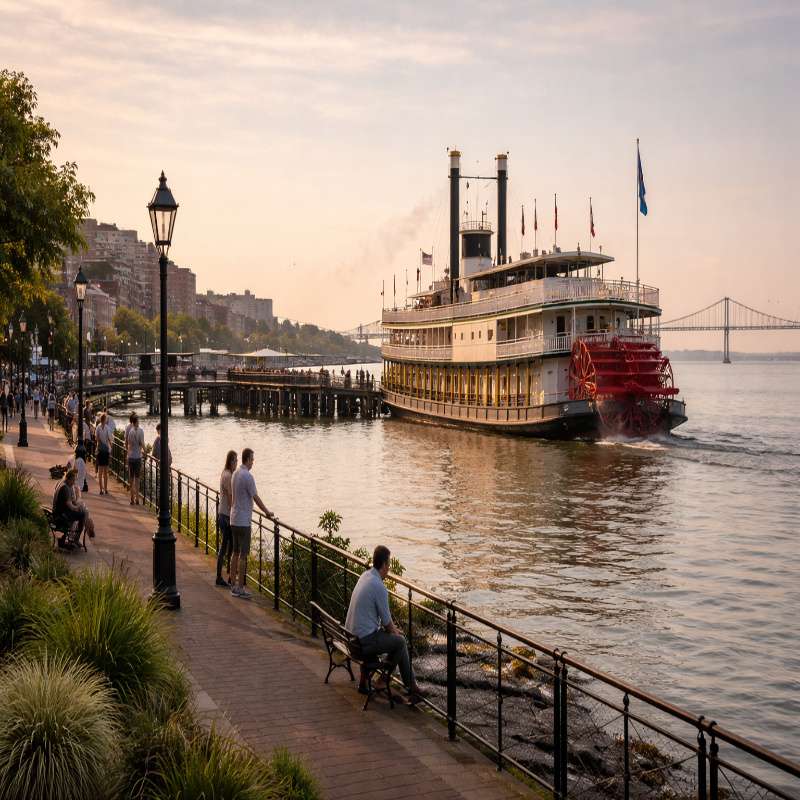
The official attractions page also calls out a steamboat tour on the Steamboat NATCHEZ. I think river experiences work particularly well if the Quarter starts to feel crowded or repetitive. You’re still near the same historic core, but the perspective changes, and sometimes that’s all you need.
If you’re building a lower-cost version of the day, you might also want to pair this neighborhood guide with free things to do in New Orleans so you can balance a paid attraction with cheaper wandering and music later on.
Hands-on experiences that make the Quarter feel less passive
Not every traveler wants to spend the whole day walking, reading plaques, and deciding where to eat next. Fair enough. The official French Quarter attractions page includes hands-on activities like cooking classes at Mardi Gras School of Cooking, rentals for bikes or scooters, escape rooms, candle making, and perfume experiences.
Take a cooking class if food is part of why you came
This is one of those activities that sounds a little touristy until you remember you’re in New Orleans, where food is part of the city’s identity in a very real way. The official guide specifically highlights Mardi Gras School of Cooking as a group-friendly experience, and that makes sense as a good anchor for travelers who want something memorable but structured.
A cooking class also solves a practical travel problem: it gives shape to the middle of the day. That matters more than people think.
Choose one “lighter” activity if your trip needs variety
Maybe you don’t want another museum. Maybe you don’t need a deep historical tour. In that case, something lighter—candles, scents, a relaxed browse through shops, even a short scooter rental—can help the neighborhood feel more rounded. The official attractions page is surprisingly broad on this point, and I think that breadth is one reason the French Quarter works for such different travel styles.
How to structure a French Quarter day without burning out
The trick with the Quarter is not to front-load too much. It’s easy to start with a burst of energy, especially if you arrive in the morning and everything feels fresh. Then by midafternoon, crowds build, the weather shifts, and suddenly your carefully arranged itinerary feels a little optimistic.
A simple daytime plan
- Morning: Start around Jackson Square while your energy is good and the neighborhood still feels a bit calmer.
- Late morning: Add one museum, tour, or cultural stop—something focused, not three “quick” stops that become a blur.
- Lunch: Keep it flexible. The Quarter has enough options that you don’t need to turn lunch into a major logistical event.
- Afternoon: Wander the quieter streets, browse shops, and leave space for spontaneous detours.
This structure sounds almost too simple, but that’s sort of the point. The French Quarter doesn’t usually reward overplanning.
A simple evening plan
If you want nightlife, I’d still begin in the Quarter and then decide how much energy you actually have. You might stay. You might not. Official Frenchmen Street guidance describes Frenchmen as one of the best streets for finding live music in New Orleans, with jazz, reggae, and blues spilling out of clubs along the corridor, and it sits conveniently between the French Quarter and Marigny. So if the Bourbon Street energy feels too much, the pivot is easy.
That shift—from the Quarter into Frenchmen later on—is one of the cleanest evening moves in the city. Not mandatory, of course. Just reliable.
What to skip if you’re short on time
This part is always a little subjective, and I think that’s fine. Not every recommendation has to pretend to be universal.
- Don’t spend your whole trip on Bourbon Street. Walk it, absorb it, then decide whether it deserves more of your time.
- Don’t stack too many museums back-to-back. The Quarter is better when it alternates between structure and wandering.
- Don’t confuse “close together” with “easy to do all at once.” The neighborhood is walkable, but it still gets tiring, especially in heat or crowds.
If you’re trying to connect your Quarter day with the rest of the city, the next logical read is New Orleans streetcar itinerary. It helps you move beyond the Quarter without making the day feel disjointed.
A realistic one-day French Quarter itinerary
If you only have one day for this neighborhood, I’d do something like this:
Morning
Begin at Jackson Square. Linger longer than you think you need to. Then move into a nearby museum or short guided walk so the neighborhood gains a little context before the day gets noisier.
Afternoon
Wander Royal and Chartres at an easy pace. Browse, pause, sit down somewhere if you need to, and stop trying to optimize every block. If you’re in the mood for an activity, this is a good time for a hands-on experience like a cooking class or another low-pressure stop.
Evening
Do a quick Bourbon Street pass if you haven’t yet, then decide whether you want the night to stay there or drift toward music. If the answer is music, Frenchmen is the natural next move, and the transition is easy enough that it doesn’t feel like starting over.
FAQs
Is the French Quarter worth visiting if I don’t care about partying?
Yes, absolutely. Official French Quarter attractions content highlights museums, tours, cooking classes, cultural stops, family attractions, and hands-on activities alongside the nightlife. In other words, the neighborhood is much broader than its party reputation.
How long should I spend in the French Quarter?
At least half a day, but ideally a full day if it’s your first time. The area is walkable and dense with options, so it rewards a slower pace much more than a rushed “checklist” visit.
Is it better during the day or at night?
Honestly, both. Daytime is better for architecture, museums, wandering, and seeing the neighborhood’s details. Nighttime brings a different energy—sometimes thrilling, sometimes exhausting. I think the best answer is to experience a bit of each and let your mood decide the rest.
Conclusion
The best things to do in new orleans french quarter are not just the obvious attractions, though you should absolutely see those too. They’re the small combinations: Jackson Square plus one museum, Bourbon Street plus a quick exit, a slow wander followed by music somewhere that feels right.
If you want to build this neighborhood into a fuller trip, link it back to the wider city plan through things to do in new orleans, keep costs under control with free things to do in New Orleans, and use New Orleans streetcar itinerary when you’re ready to move beyond the Quarter. That way, the neighborhood becomes your starting point, not your entire trip.